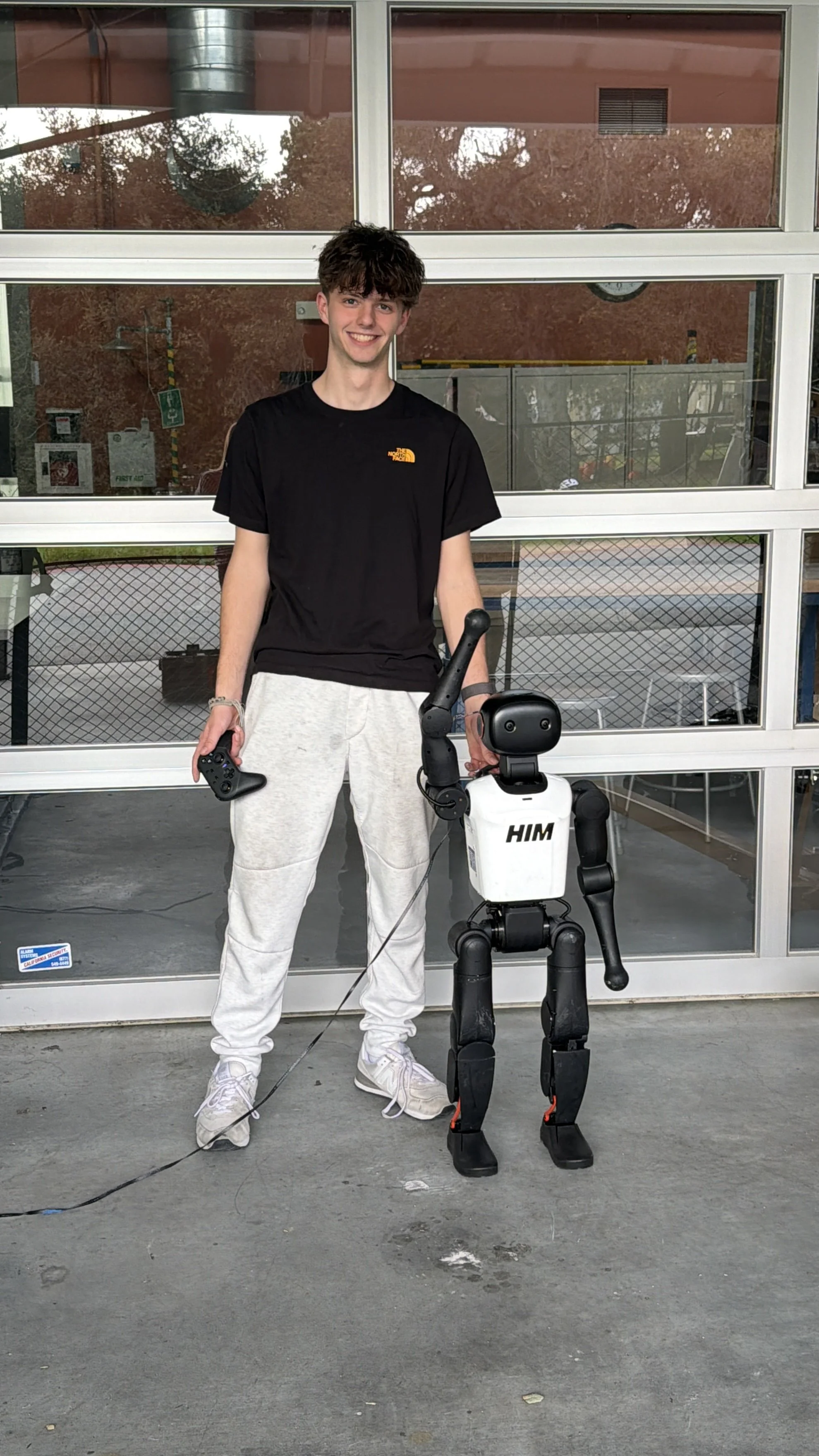
Through Stanford Student Robotics, I worked on humanoid robotics projects using the Booster K1 platform, including motion-imitation demonstrations developed in collaboration with HIM Robotics. Our work focused on training and validating behaviors in simulation before deploying them to the physical robot for real-world demonstrations.
Humanoid Robotics
Humanoid Football Demonstration
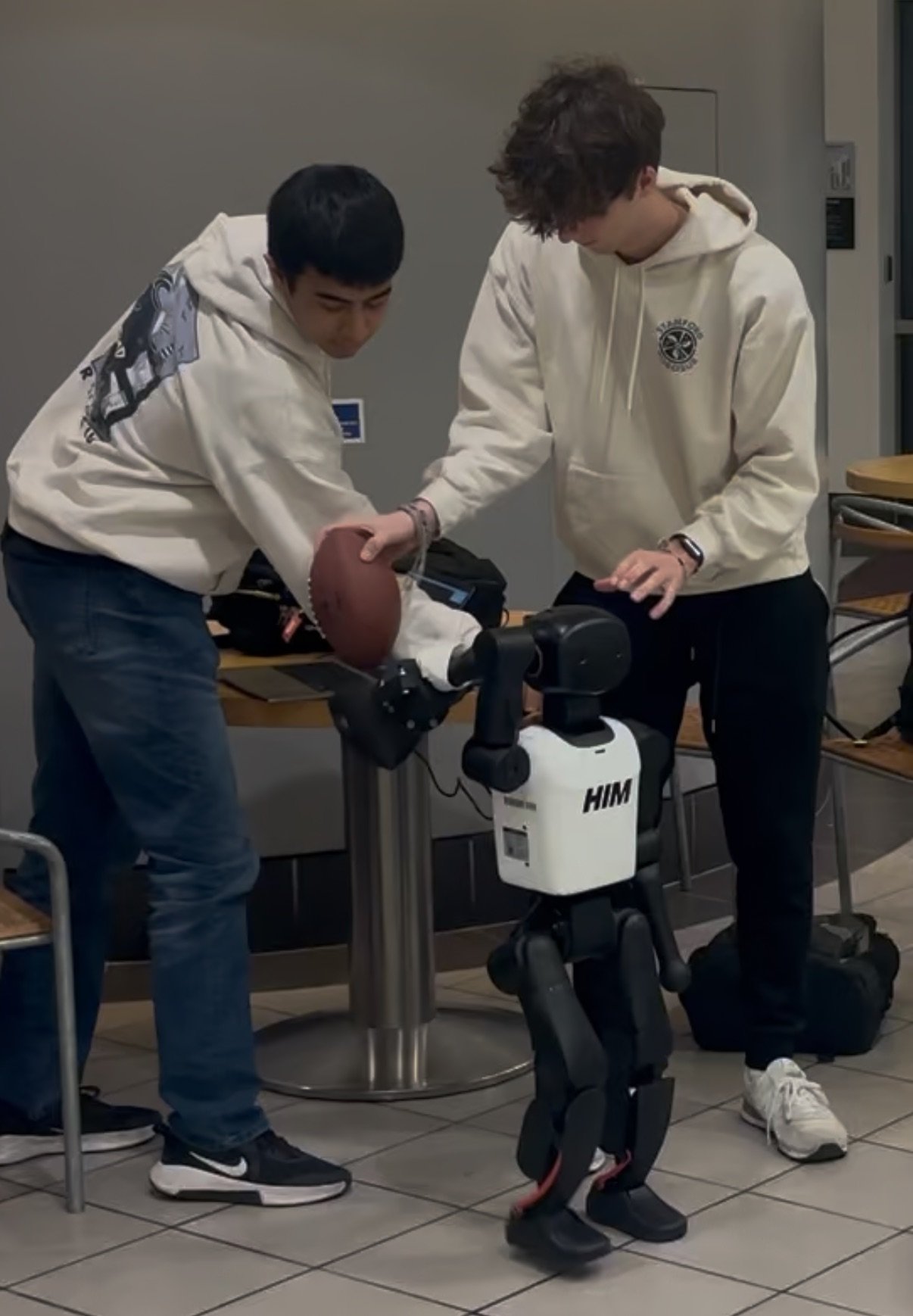
For Complex Family Style during Super Bowl LIX weekend, our Stanford Student Robotics team collaborated with HIM Robotics to develop a football-throw demonstration using the Booster K1 humanoid. I designed a custom arm attachment to hold and position the football and contributed to the robot’s motion programming, helping develop and test the behavior before deployment on the physical robot. The demonstration was presented at an event attended by more than 10,000 guests.
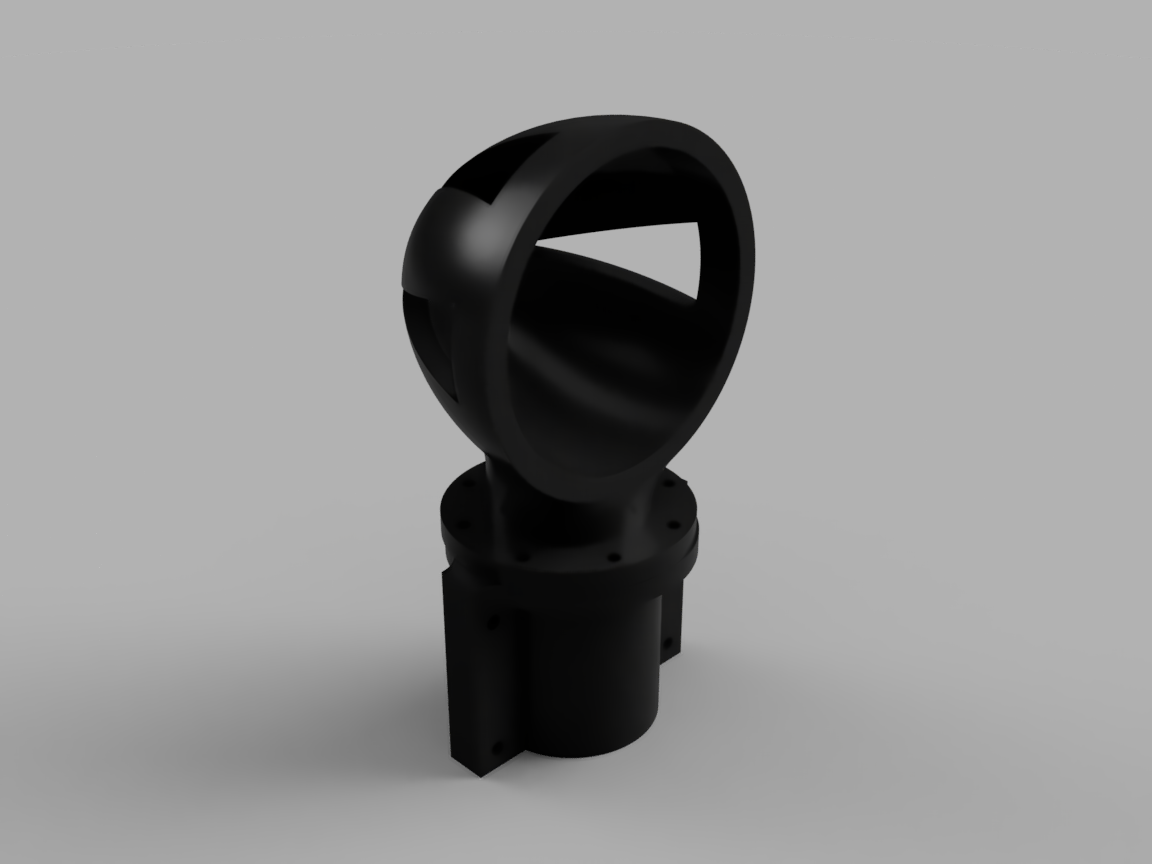
The football holder was developed through repeated CAD and physical testing. The first prototype established the basic concept but failed structurally during testing when the attachment broke away from the arm. A second revision improved the mounting strength but positioned the football at an unfavorable angle for the throwing motion. The final design revised both the mounting geometry and ball orientation to create a more robust attachment better aligned with the robot’s motion.
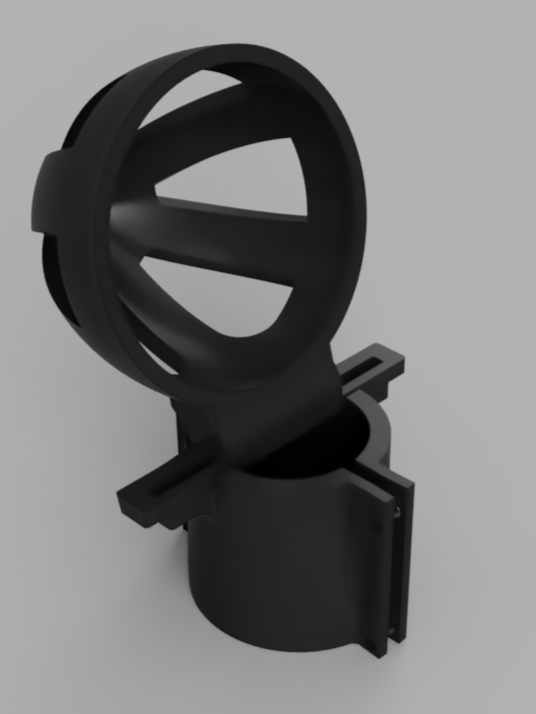
V1
V3
Nick Kosir
Motion Imitation
Through Stanford Student Robotics and HIM Robotics, our team developed a motion-imitation behavior for the Booster K1 based on a human dance performance. The project involved retargeting the reference motion to the K1, training and testing the behavior in simulation, and deploying the resulting motion to the physical robot for a social-media demonstration.
HIM Robotics documented the full development of the Nick Kosir dance demonstration, from converting the original dance video into joint motion data through MuJoCo to training the imitation policy in Isaac Lab. The project page also covers the team’s simulation iterations, transition to Booster’s training pipeline, and the final behavior deployed on the K1.
The motion-imitation workflow progressed from simulation training to cross-environment validation and finally to deployment on the physical Booster K1. Using Isaac Lab and MuJoCo allowed the team to refine and evaluate the behavior before testing it on hardware, reducing iteration time and making deployment more controlled.
Isaac Lab Simulation
The retargeted reference motion was used to train an imitation policy in simulation.
MuJoCo Validation
The trained behavior was tested in MuJoCo to evaluate motion quality and stability before hardware deployment.
Physical Robot Test
After simulation validation, the behavior was deployed to the K1 for real-world testing and refinement.