SPLASH
Sensor-guided Pan-tilt Liquid Actuation and Sensing Hardware
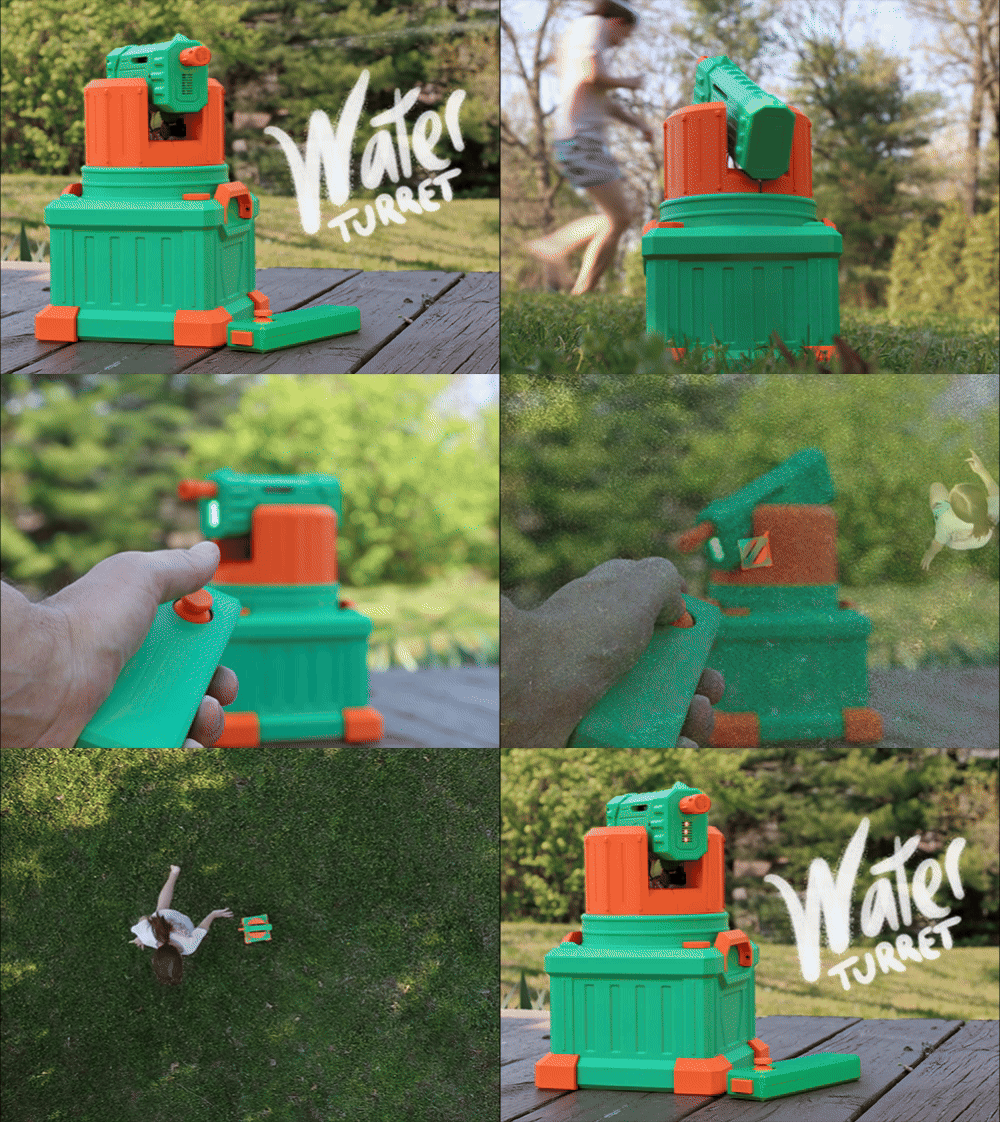
Original remote-controlled water turret by MaKim, serving as the starting point for SPLASH’s autonomous sensing and control upgrades. GIF credit: MaKim / MakerWorld.
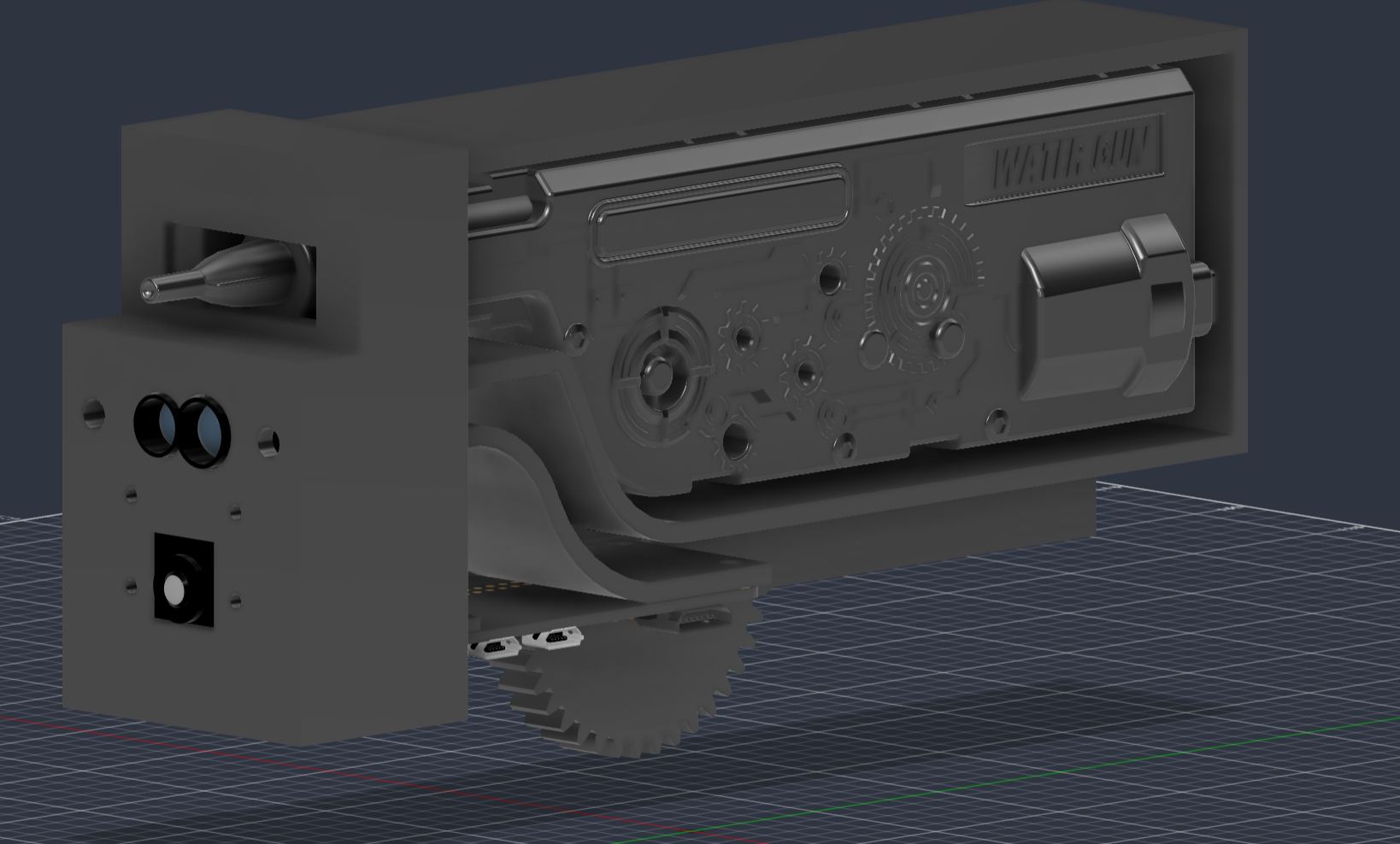
SPLASH is a camera-guided pan-tilt water turret I’m developing to detect a person, estimate their distance, and aim a water stream automatically. The project combines custom mechanical parts, a Raspberry Pi for vision processing, and an STM32-based PCB for control and power distribution.
This is an ongoing build. So far, I’ve worked on the mechanical design, selected the main components, and developed the PCB schematic and first-pass layout. I’m now working toward hardware testing and integration, with tracking software and full-system operation still ahead.
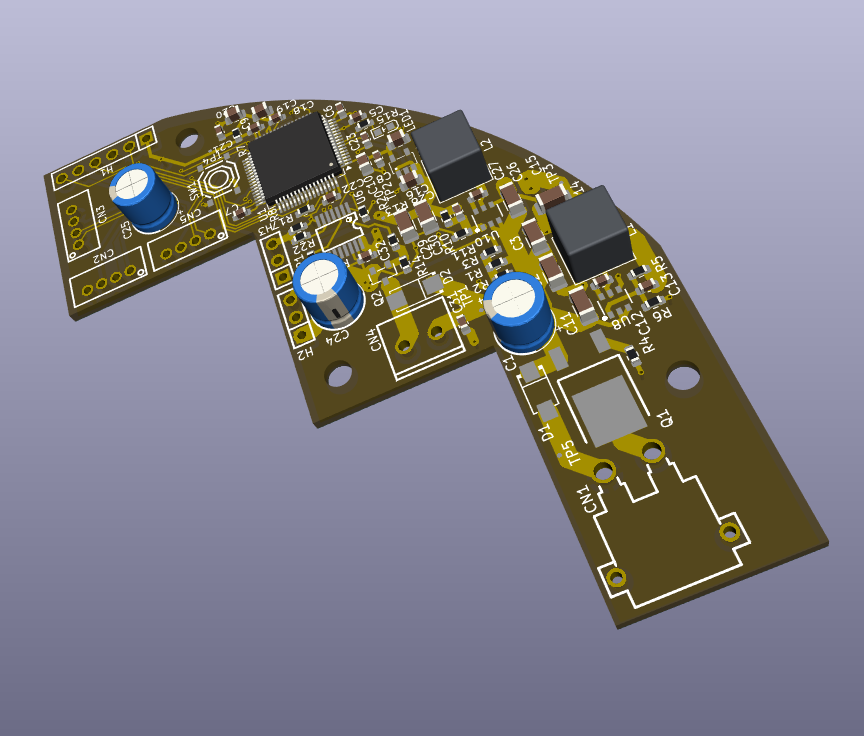
Custom PCB
I’m developing a custom PCB in KiCad to bring SPLASH’s power distribution, embedded control, and peripheral connections onto one board. The system pairs a Raspberry Pi Zero 2 W for camera processing with an STM32 microcontroller for actuation and hardware interfacing. The board distributes power from a 2S LiPo battery through buck converters for the computing and control electronics, provides servo PWM outputs for pan and tilt, and includes a MOSFET switching circuit with a flyback diode to control the sprayer. Connections for sensing, communication, and programming support the eventual integration of the full system.
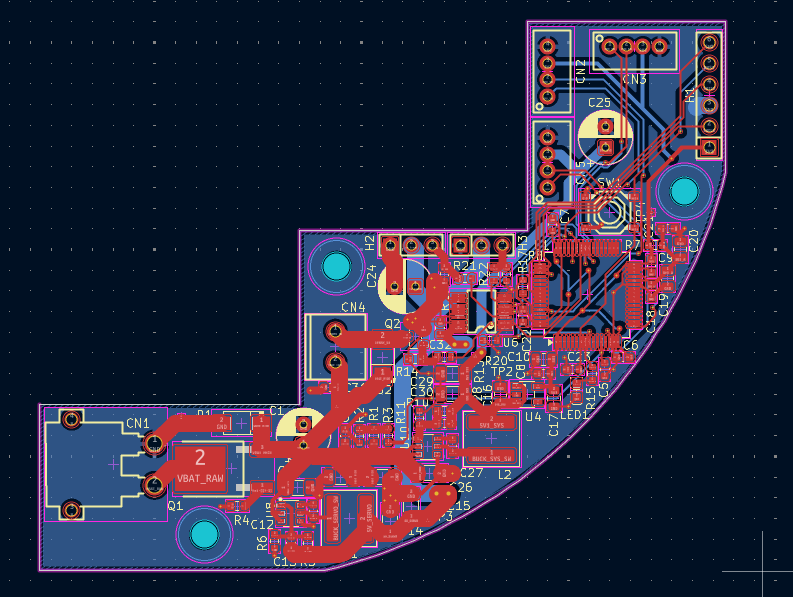
The schematic and first-pass component layout are complete, with routing and review still in progress. A major design challenge has been fitting the board into the enclosure while accommodating power components, external connectors, and mounting holes. During layout, I’ve focused on keeping regulator circuitry compact, placing decoupling capacitors close to the MCU supply pins, and providing ground connections near those capacitors. The views shown capture this stage of development; assembly and testing will be needed to verify power delivery, communication, and operation under servo and sprayer loads.
SPLASH is currently moving from design toward testing. I’m waiting for the remaining parts to arrive so I can assemble the pan-tilt mechanism and check its range of motion and mechanical feasibility. In parallel, I’m completing final design reviews of the custom PCB before fabrication.
I’m also beginning work with the Raspberry Pi AI Camera, TFMini Lidar, and Raspberry Pi Zero 2 W to get person detection running. These initial tests will help establish the vision system’s performance before I integrate detection with aiming and sprayer control.